

The paradox of modern living
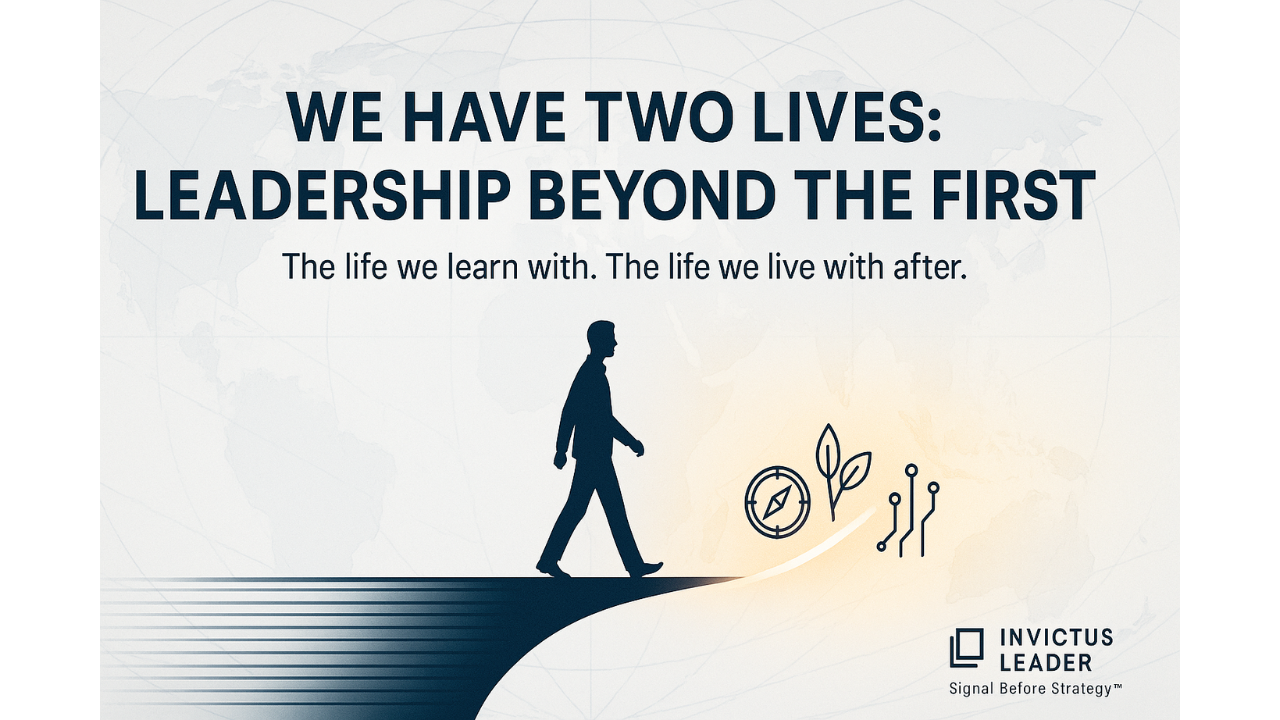
We live in an age of acceleration: exponential technologies, compressed timelines, and disrupted institutions. Yet the most profound truth about human existence remains timeless: we have two lives — the life we learn with, and the life we live with after that.
The first is shaped by trial, error, and discovery. The second is defined by what we do with that knowledge. The transition between the two is subtle — it often arrives unannounced, through a crisis, an encounter, or a moment of clarity. But once it happens, we begin living differently.
This raises an uncomfortable question for leaders, organizations, and societies: if our second life is about applying what we’ve learned, why are so many still repeating the mistakes of their first?
From experience to application
Most leadership development models focus on accumulating knowledge rather than activating wisdom. A leader’s “first life” is full of data points — business schools, management frameworks, case studies, dashboards. But if these do not translate into foresight, clarity, and better decision-making, then they remain trapped in the first life.
History offers evidence:
- Kodak learned photography but failed to live its second life in digital imaging.
- Nokia mastered mobile hardware but struggled to transition into the software-defined era.
- Generative AI today presents a similar test: organizations are learning fast, but few are applying that learning to redesign work, governance, and trust.
The challenge is not access to knowledge — it is the courage to pivot, the foresight to anticipate, and the humility to apply lessons at scale.
Legacy without record
Many leaders worry about being remembered — through reports, biographies, or institutional records. But legacy is rarely a matter of archives. It is a matter of memory.
Communities remember those who altered their trajectory. Colleagues remember those who created spaces for growth. Families remember those who lived their values consistently. With or without the record, the second life echoes in how others speak of us long after we are gone.
This insight is urgent in an AI-mediated world. Algorithms may preserve our digital footprints forever, but remembrance is still human. The record is permanent; the meaning is not.
A call to action: moving into the second life
For leaders and organizations, the transition from the first to the second life demands three commitments:
- From learning to foresight. Stop collecting knowledge as if it were insurance. Start framing signals, scenarios, and systemic shifts. Knowledge is inventory; foresight is velocity.
- From performance to impact. Metrics like quarterly profit or efficiency scores belong to the first life. The second life asks: what future conditions did your decisions create? For people, for the planet, for generations unseen.
- From reputation to remembrance. Building a brand is first life work. Building trust, dignity, and spaces of meaning — these shape the stories people tell after us.
The unfinished future
If we only live the first life, our story ends with lessons untested. But if we embrace the second, our impact transcends our time. The shift is neither automatic nor guaranteed. It is a choice, renewed daily.
As leaders, communities, and societies, the question is not whether we will be remembered. It is for what.

2 Comments
Cindy644
https://shorturl.fm/LeuzK
Ronald1436
Monetize your influence—become an affiliate today!