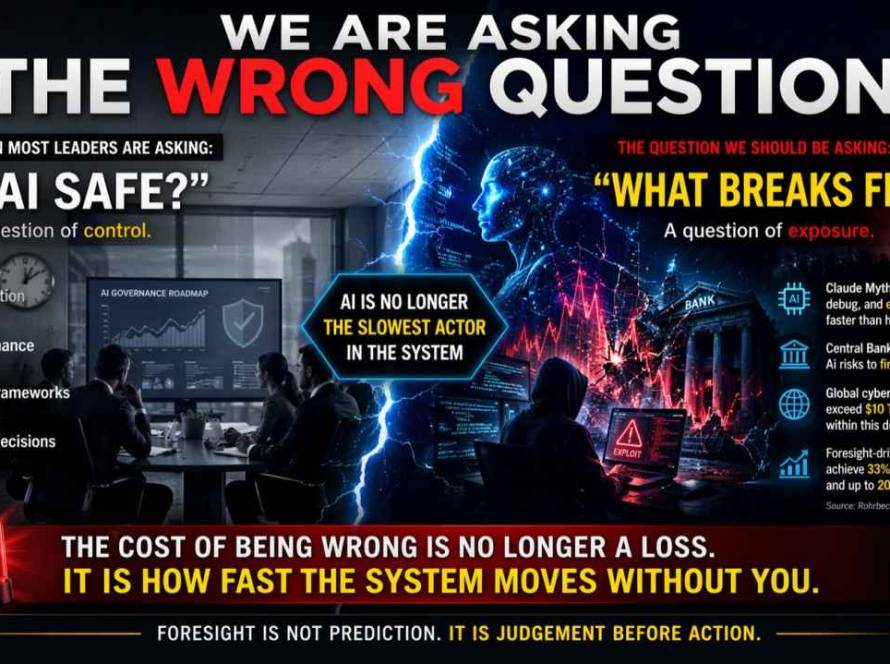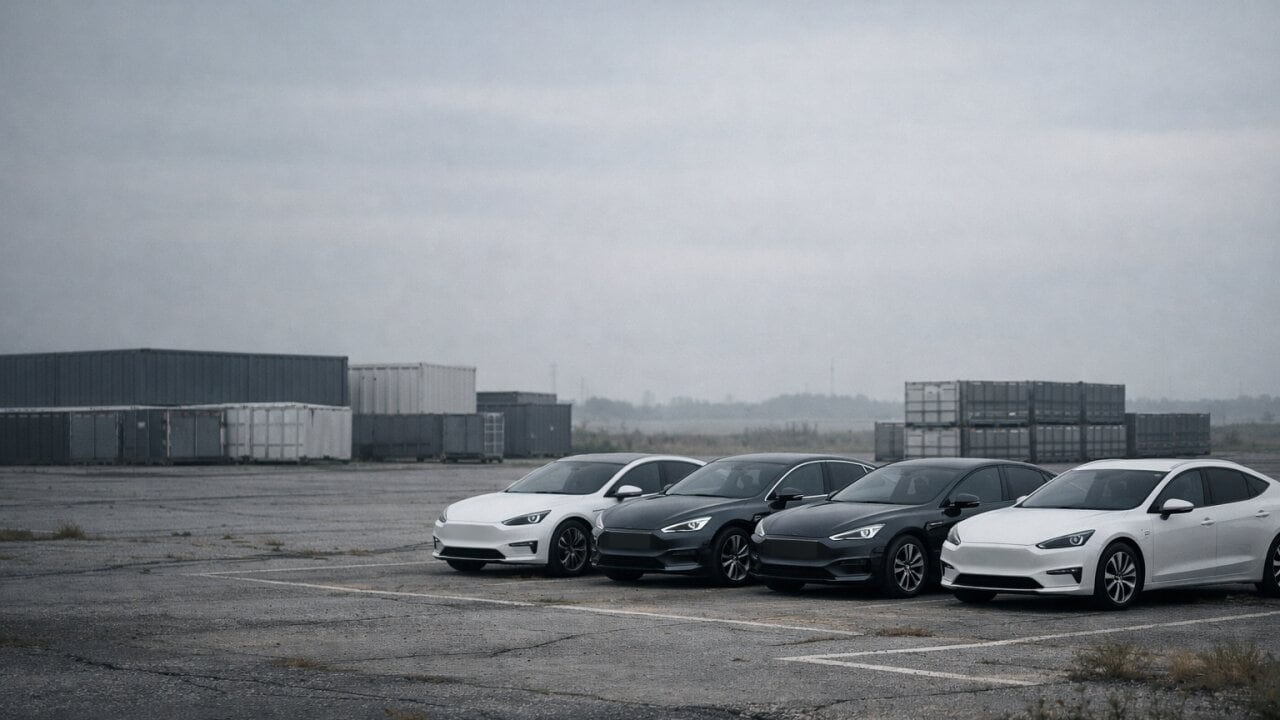
I had an interesting morning conversation with a friend about the future of electric vehicles.
I said this—very calmly:
“The dominant consumer EV narrative, as it exists today in mature, subsidy-dependent markets, reaches its end-state by the end of this year.”
We made a bet. If I’m wrong, I buy him nasi kandar in Penang. If I’m right, he does.
Why did I say that?
Because the signals are no longer weak. They are no longer speculative. They are structural fractures.
Not political noise. Not social-media outrage. Not anti-technology sentiment.
Reality.
Let me be precise about scope, because precision is what separates foresight from hot takes.
This is not a claim that electrification disappears. This is not about industrial electrification, two-wheelers, or tightly controlled fleet environments where charging, usage, depreciation, and disposal are centrally managed. This is about the mass, privately owned consumer EV model being positioned as a singular, inevitable future — particularly across Europe, North America, and other mature markets where adoption is sustained more by incentives and moral framing than by intrinsic system readiness.
That narrative is breaking.
Yes, EV sales still show growth in headline numbers. But growth alone is not proof of viability. Markets can grow inside distorted conditions for a while — subsidies, regulatory pressure, deferred costs, and optimistic assumptions — but those distortions always surface elsewhere, usually in margins, residual values, or public balance sheets.
The first fracture is demand quality.
Demand today is no longer organic. It is shaped by incentives, subsidies, and obligation narratives. In several mature markets, more than a third of effective EV affordability is still policy-supported rather than market-driven. When fiscal pressure tightens, political priorities shift, or consumers sense OEM hesitation, demand does not decline gradually — it pauses. Deferred purchases are one of the earliest and most reliable signals of narrative fatigue.
The second fracture is the cost equation.
Battery technology will improve — it always does. But foresight is not about if. It is about when and at what systemic cost. Today, battery replacement costs still represent a material proportion of total vehicle value, especially after five to seven years of use, precisely when resale decisions matter most. Add to that geopolitical concentration of critical minerals, insurance repricing, degradation uncertainty, and long-term ownership ambiguity, and the economics become fragile long before innovation catches up.
The third fracture is the one most people avoid discussing openly.
EVs have a second-hand problem.
A vehicle without a credible resale market is not a consumer asset — it is a depreciating liability. In multiple markets, used EV pricing volatility now exceeds that of comparable ICE vehicles, driven by opaque battery health, rapid model refresh cycles, and uncertainty around future charging and software compatibility. Consumers may not articulate this in policy language or spreadsheets, but they feel it instinctively.
Once resale trust weakens, mass adoption stalls — regardless of incentives.
And this leads directly to a question that almost no one wants to answer.
If EVs have weak or collapsing second-hand value, how exactly are they meant to exit the system?
Cars do not disappear when resale markets fail. They accumulate.
Unlike internal combustion vehicles, EVs concentrate end-of-life risk in a single component: the battery. When replacement costs approach or exceed residual vehicle value, reuse collapses. What follows is not circularity — it is storage, delay, and deferral.
Globally, projected end-of-life battery volumes are already outpacing certified recycling and repurposing capacity in most consumer markets. Recycling remains energy-intensive, chemically complex, and economically marginal without subsidy support. Second-life applications, while promising, face variability, safety certification challenges, and limited scalable demand.
What cannot be resold, reused, or economically recycled does not become “sustainable” by declaration. It becomes temporarily deferred waste, often exported, warehoused, or administratively parked outside public view.
This is not merely an industry oversight. It is a governance vacuum.
No single actor fully owns EV end-of-life responsibility — not governments, not OEMs, not insurers. Responsibility is fragmented, and fragmented responsibility is how system risks persist until they surface as crises.
This is the blind spot in the sustainability narrative.
Sustainability is not determined at the showroom or the tailpipe. It is determined at end-of-life governance, land use, liability clarity, and community consent.
A transition that accelerates adoption without building credible exit pathways is not circular. It is incomplete.
Consumers sense this uncertainty — even if they cannot articulate it. That unease feeds back into resale values, insurance pricing, and purchase hesitation, reinforcing the very demand slowdown the industry struggles to explain.
The fourth fracture is infrastructure realism.
Charging infrastructure is not failing — it is colliding with physical limits. Urban density, grid capacity, peak-load risk, land constraints, and capital intensity are not software problems. They are engineering and governance constraints. Scaling chargers is easy in presentations. Scaling grids, securing land, and maintaining public acceptance are not.
This brings us to the most sensitive claim of all: sustainability.
Calling EVs “sustainable” while ignoring mining intensity, battery lifecycle emissions, recycling limitations, fossil-fuel-dependent grids, and the geopolitical concentration of critical minerals is not holistic sustainability. It is selective accounting. Sustainability that measures tailpipe emissions while externalising system-level and downstream costs is not sustainability — it is narrative optimisation.
This does not deny the climate challenge. It challenges single-solution absolutism.
Internal combustion engines created their own legacy problems over decades. That history is precisely why new transitions should not repeat the same mistake at accelerated speed, under compressed timelines, and with unresolved exit strategies.
Obligation without system readiness does not accelerate transitions. It distorts them.
And this is where most transitions actually break.
They do not collapse because technology fails. They collapse when one stakeholder refuses to keep absorbing the cost.
Today, that pressure point is emerging simultaneously across governments facing subsidy fatigue, OEMs absorbing margin compression and write-downs, insurers repricing long-term risk, municipalities confronting grid and land constraints, and consumers hesitating at the intersection of price, uncertainty, resale value, and disposal anxiety.
This is why the timeline matters.
By “end of this year,” I am not predicting a dramatic collapse or a single headline moment. I am pointing to threshold signals: production pauses, incentive recalibrations, inventory accumulation, deferred purchasing behaviour, cautious residual value assumptions, and increasingly restrained language in OEM earnings calls.
These are not opinions. They are observable shifts.
Some will argue that China proves EVs work.
China is not a counter-example — it is a different system. Central coordination, subsidy elasticity, grid direction, and social compliance create conditions that do not translate cleanly into liberal, consumer-driven markets. What works under orchestration does not automatically scale under choice.
Others will argue that total cost of ownership favours EVs.
Consumers, however, do not buy averages. They buy certainty.
And uncertainty — about batteries, resale, insurance, infrastructure, and disposal — delays decisions more effectively than any negative headline.
This brings us to the core misreading.
EVs are being treated as the destination instead of a transition technology.
Mobility was never going to converge into a single propulsion answer.
What comes next will be plural, contextual, and uneven: hydrogen hybrids where energy density matters, synthetic fuels where infrastructure already exists, radically lighter vehicles instead of heavier batteries, distributed energy mobility, and ownership models that reflect use, not ideology.
Transitions don’t fail because the idea is wrong. They fail because timing, systems, and judgment are misread.
If credible, scalable end-of-life governance emerges — if resale stability returns, recycling capacity meaningfully exceeds waste generation, and infrastructure scales without distortion — then this assessment should change. Foresight is not about being right forever. It is about updating judgment when reality does.
Until then, the signals point in one direction.
So yes — we shook hands over nasi kandar.
By the end of the year, we won’t be arguing about whether EVs “won” or “lost”.
We’ll be quietly acknowledging that the story we were told was too simple for the world we actually live in.
And that moment — when the narrative breaks before the technology disappears — is where foresight begins.