Most people want a better life.
They pursue better careers, better relationships, better opportunities, and better circumstances.
Yet very few stop to ask a far more important question:
What actually determines the quality of a life?
After working with leaders, entrepreneurs, scientists, and students across different industries and countries, I have come to a simple but uncomfortable observation.
The quality of your life is largely determined by the quality of your mind.
And the quality of your mind is determined by something even more fundamental.
Thinking: The Invisible Architecture
Thinking is invisible, yet it shapes everything.
Every decision begins with a thought. Every action follows a judgment. Every outcome is the accumulated result of those judgments.
In simple terms:
Thinking → Judgment → Decisions → Actions → Life Outcomes
Many people spend their lives trying to change their circumstances.
But circumstances alone rarely determine outcomes.
Interpretation does.
The Same Event, Two Different Lives
Consider something simple.
Two people face the same crisis.
One person sees the crisis as an opportunity to learn.
Another person sees the same crisis as a personal disaster.
The event is the same.
The facts are the same.
The environment is the same.
What is different is the mind interpreting the event.
One mind asks:
What can I learn from this?
The other asks:
Why is this happening to me?
That subtle difference in thinking creates two completely different trajectories.
Over time, the first person develops resilience, insight, and foresight.
The second develops frustration, blame, and fear.
The crisis was never the real problem.
The thinking behind the crisis was.
Small Differences in Thinking Create Large Differences in Outcomes
This pattern appears everywhere.
Two employees lose their jobs.
One sees an ending. The other sees a transition.
Two entrepreneurs experience failure.
One sees humiliation. The other sees information.
Two leaders see technological disruption.
One sees a threat to defend against. The other sees a signal to reinvent the organisation.
The event is identical.
The interpretation is not.
And interpretation is shaped by thinking.
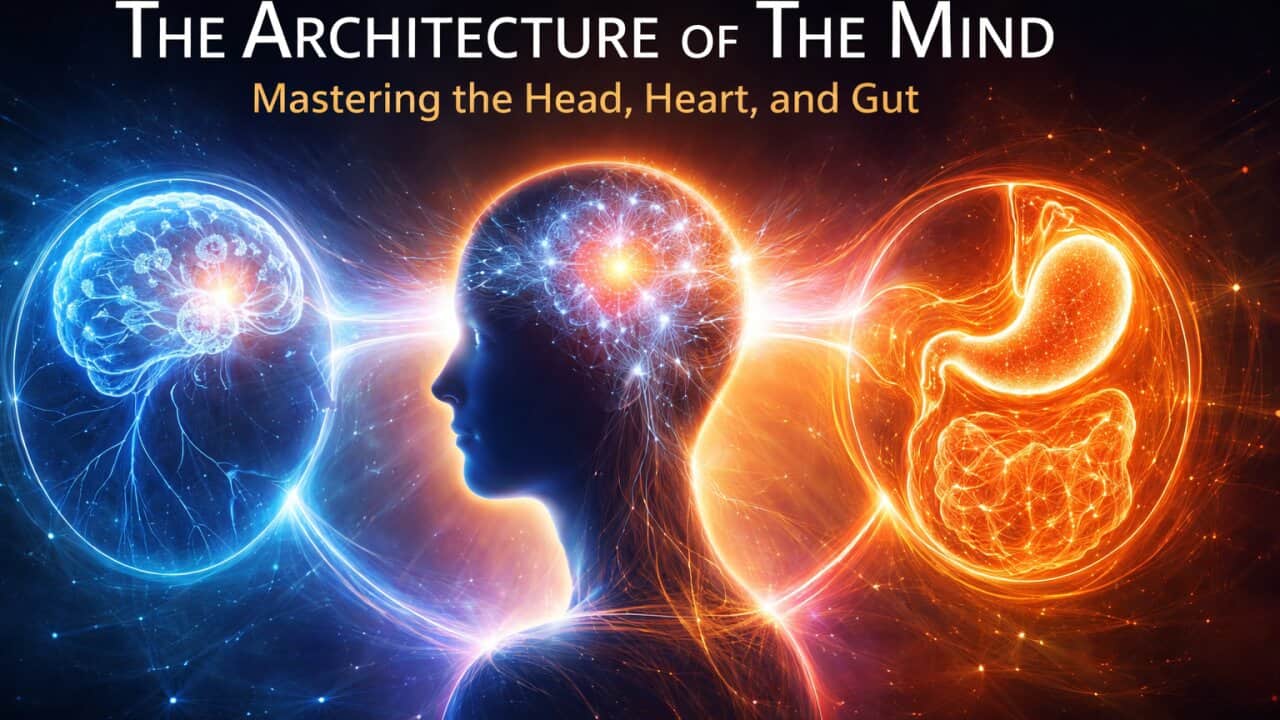
The Three Thinking Systems
We often hear people say:
Think with your head. Listen to your heart. Trust your gut.
These expressions reflect three different human sensing systems.
The Head
The head represents analytical intelligence.
It processes logic, facts, probabilities, and structured reasoning.
It allows us to analyse risk, evaluate options, and construct strategies.
But logic alone rarely produces wisdom.
Many highly educated individuals possess strong analytical capability yet struggle with judgment in uncertain situations.
The Heart
The heart represents emotional intelligence.
It governs empathy, values, trust, and human consequence.
Without the heart, decisions may be logically correct but socially destructive.
History contains many examples of brilliant strategies that failed because they ignored the human dimension.
The Gut
The gut represents intuitive intelligence.
It develops through accumulated experience and pattern recognition.
Many experienced leaders describe moments when something “felt wrong” long before they could explain why.
The gut often detects patterns the conscious mind has not yet articulated.
Judgment: Where the Three Meet
True judgment emerges when head, heart, and gut operate together.
The head analyses.
The heart evaluates.
The gut senses patterns.
When these systems align, clarity emerges.
When they conflict, confusion follows.
But there is a fourth capability that is rarely discussed.
The Fourth Intelligence: Foresight
The head analyses what is happening.
The heart evaluates human consequences.
The gut recognises patterns from experience.
But foresight does something different.
Foresight connects signals to possible futures.
It asks:
What might this become? What happens if this trend continues? What are the second- and third-order consequences?
Foresight is not prediction.
It is the disciplined ability to think beyond the present moment.
And this capability often determines whether individuals and organisations merely react to change or anticipate it.
The Education Paradox
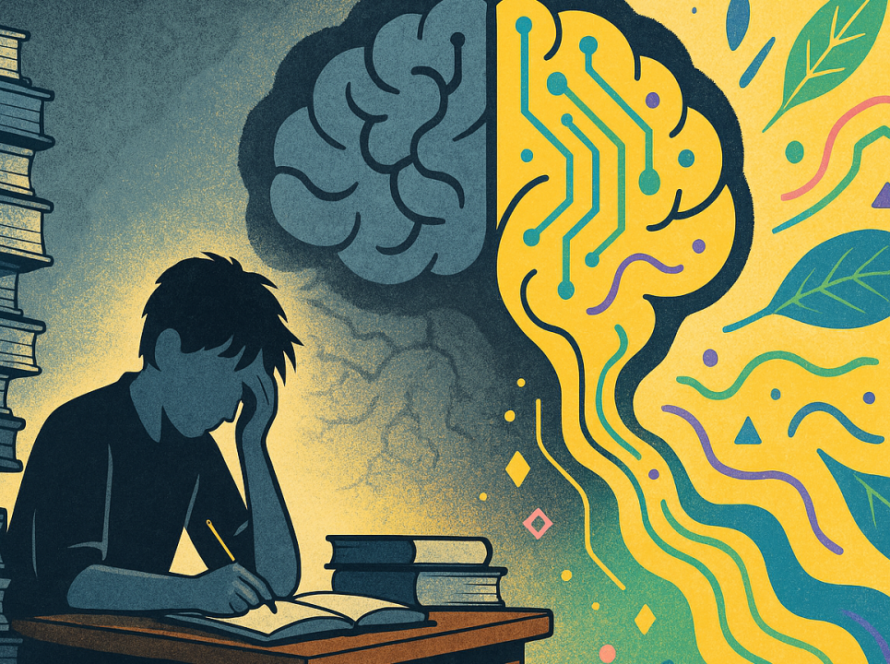
Ironically, the modern education system often trains people for the one capability machines will soon outperform.
Memorisation.
Calculation.
Reproduction of information.
Students are rewarded for producing correct answers.
But the real world rarely presents clear answers.
The real world presents uncertainty.
And uncertainty demands something far deeper than knowledge.
Judgment.
Judgment cannot be memorised.
It must be cultivated through thinking.
Why This Matters Now
Artificial intelligence will soon surpass humans in many analytical tasks.
Machines will dominate areas that rely purely on logic and computation.
But machines struggle with something profoundly human:
judgment under uncertainty.
The ability to sense weak signals.
The ability to interpret ambiguity.
The ability to anticipate consequences before they fully appear.
In short:
the ability to think deeply.
A Final Reflection
Most people spend their lives trying to improve their circumstances.
Very few spend their lives improving the quality of their thinking.
Yet eventually every life reveals the same truth.
Two people can face the same situation.
One sees a problem.
The other sees a possibility.
One sees disruption.
The other sees a signal.
One sees the present.
The other sees the future.
The difference is rarely intelligence.
The difference is the architecture of the mind interpreting reality.
And that architecture is built one thought at a time.