Introduction :
For decades, 360-degree feedback became one of the most accepted tools in leadership development. Managers rate managers. Peers rate peers. Teams rate leaders. Scores are benchmarked. Reports are produced. Debriefs are held.
In a more stable era, this had logic. It widened perspective beyond one boss’s opinion. It sometimes improved self-awareness. It gave organisations a structured way to discuss leadership behaviour.
But the environment that made 360 feedback valuable has changed faster than the tool itself. And that matters — because many organisations are still evaluating leaders using frameworks built for comparatively linear times.
Many organisations are still assessing leaders for conditions that no longer exist.
The Leadership Equation Has Been Rewritten
We are no longer operating in slow cycles. Artificial intelligence is compressing decision windows. Geopolitical shocks are redrawing supply chains. Business models are being disrupted by smaller, faster competitors. Workforces are fragmenting across generations, contracts, and platforms.
The World Economic Forum has reported that nearly 44% of workers’ core skills are expected to be disrupted within five years through technological and structural shifts. The half-life of leadership relevance is shrinking. Yet many organisations still evaluate leaders using tools built for a different era.
The Real Issue Is Not 360 Itself
The issue is not that 360 feedback has no value. The issue is that it primarily measures how a leader is experienced by others — often based on past behaviour. Typical themes include communication, collaboration, visibility, empathy, people management, and executive presence.
These remain useful. But they are no longer enough.
Boards now need to know far more challenging things:
What boards must evaluate today
Boards now need to know:
- Can this leader make sound decisions with incomplete data?
- Can they detect weak signals before competitors do?
- Can they lead through AI-driven workforce redesign?
- Can they reallocate talent quickly when markets shift?
- Can they maintain trust during volatility?
- Can they adapt before decline becomes visible?
Retrospective Feedback Has Limits in Nonlinear Times
Most 360 systems are retrospective. They ask people to evaluate what they have already seen. But nonlinear environments reward what has not yet happened: the risk not yet visible, the opportunity not yet obvious, the disruption not yet mainstream.
This creates a dangerous gap. A leader may score highly on traditional feedback metrics while being strategically unprepared for what comes next. Another leader may receive mixed ratings because they are challenging comfort — yet be exactly the person needed for the future.
Perception matters. But perception can lag reality.
The landmark research by Avraham Kluger and Angelo DeNisi found that feedback interventions improved performance on average — but in more than one-third of cases, performance worsened. Feedback is not automatically progress.
What High-Performing Boards Should Measure Now
McKinsey & Company has repeatedly linked leadership quality, organisational health, and adaptability to superior long-term performance.
The next decade requires a broader leadership scorecard.
Strategic Sensing
Can they see what others dismiss until it becomes expensive?
Decision Velocity with Judgement
Can they move quickly without creating reckless errors?
Talent Reallocation Capability
Can they redeploy people faster than competitors redeploy strategy?
Trust Under Pressure
Do people follow when certainty disappears?
Systems Thinking
Can they see second and third-order consequences before acting?
Learning Agility
Can they abandon yesterday’s success formula fast enough?
That is modern leadership evidence.
The Invictus View
At Invictus Leader, we believe leaders should not only be measured by how they perform in stable conditions.
They must be measured by how they think, decide, and mobilise when stability breaks.
The Invictus Leadership Readiness Lens™
Sense
Read weak signals early.
Frame
Define the real problem before others do.
Judge
Make sound calls under pressure.
Shape
Mobilise people into coordinated action.
Shift
Adapt before the environment forces it.
That is leadership fit for the present and future.
conclusion
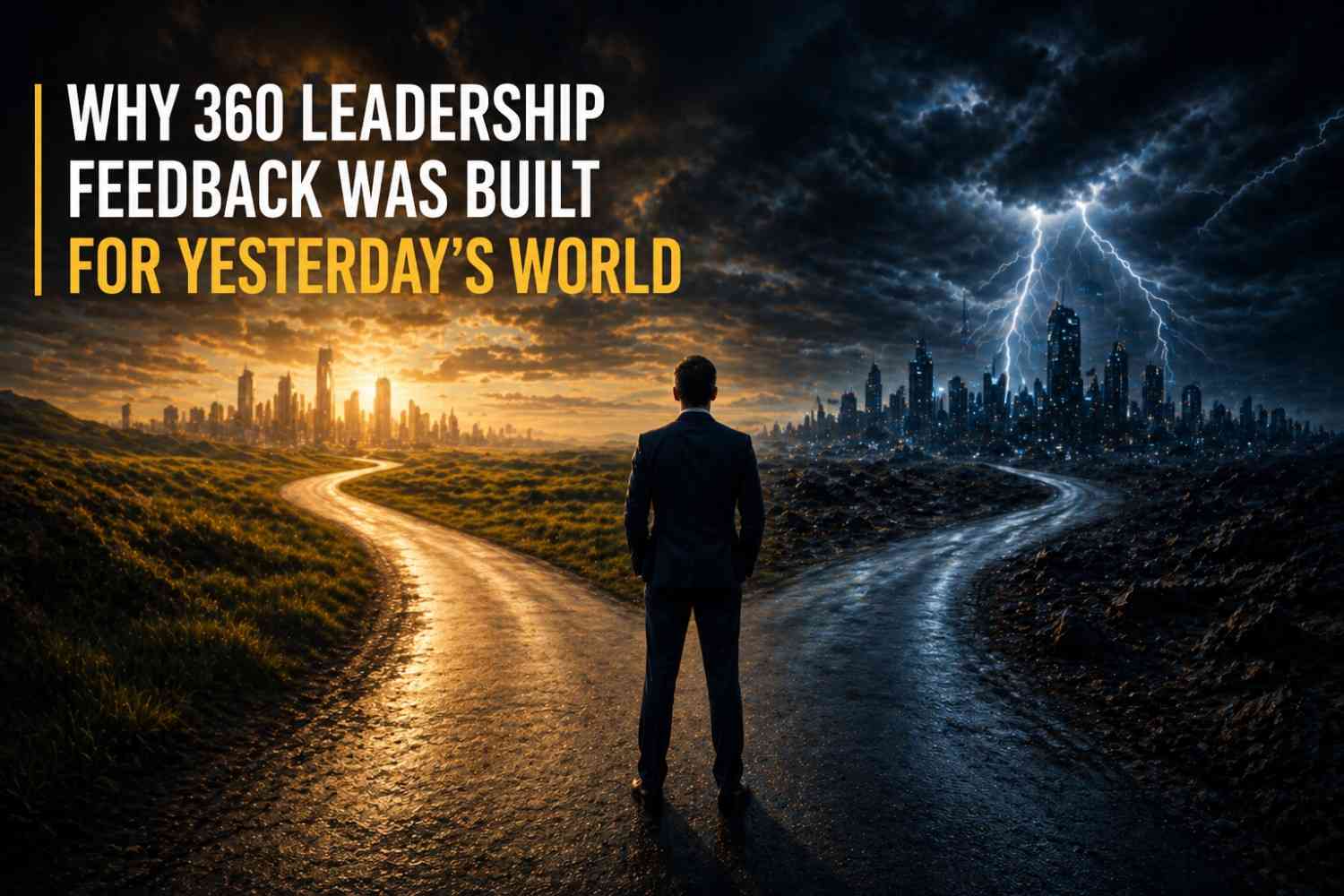
Many companies still assess leaders for comfort. Markets now reward leaders for navigation. One system measures whether people like the captain. The other determines whether the ship survives the storm.
Boards that fail to understand this difference may discover it too late.