What Is Organizational Development Consulting?
At its core, organizational development consulting is not about applying quick fixes or holding high-level workshops. Instead, it is a systematic, data-driven approach to improving a company’s overall health and operational effectiveness. Specifically, rather than addressing departments in isolation, an expert consultant looks at your business as a living organism. Therefore, they examine how your structure, culture, processes, and leadership behaviors align with your strategic goals.
Indeed, when a company experiences friction, leadership teams often focus on surface-level symptoms like missed deadlines or team conflicts. However, an OD consultant looks deeper to locate the root cause. For example, the real bottleneck is frequently an outdated decision-making structure or a change process that exists only on paper.
Ultimately, while traditional consulting tells you what to do, organizational development consulting builds the internal capability to sustain changes long-term.
Why Businesses Need It
Every company eventually reaches a tipping point where the processes that drove early success begin to hinder growth. For instance, a highly hands-on management style that worked with a team of 30 becomes a major bottleneck at 300 employees. Similarly, a relaxed approach to communication starts producing confusion once multiple business units must coordinate.
Key Takeaway
In other words, OD consulting is not a reaction to crisis. Instead, it is how leadership teams keep structure and culture aligned with the future direction of the business.
Specifically, businesses typically hire consultants to navigate critical turning points, such as:
- Managing post-merger integration: Reconciling two distinct corporate cultures and operating systems.
- Scaling infrastructure: Restructuring roles and hierarchies during periods of rapid growth.
- Bridging the execution gap: Aligning day-to-day operations with long-term executive strategy.
- Resolving department silos: Eliminating chronic friction between teams to streamline work.
In these situations, an objective external expert brings a valuable neutral perspective. Furthermore, since they have no stake in internal politics, they can diagnose issues accurately and help leadership design a sustainable path forward.
What Does an Organizational Development Consultant Do?
An effective OD consultant wears multiple hats: they are part detective, part architect, and part mediator. Specifically, instead of offering canned solutions, they tailor their work around four core phases:
Diagnosis & Assessment
For example, the consultant maps out what is actually happening in your organization using interviews and audits. Consequently, they uncover gaps between executive perception and operational reality.
Strategic Design
Next, they co-create practical blueprints once the diagnosis is clear. For instance, this might involve restructuring reporting lines, mapping decision rights, or redesigning communication pathways.
High-Impact Facilitation
Furthermore, they facilitate alignment workshops because a plan is only as good as the buy-in it generates. As a result, leadership and teams process change productively and address friction openly.
Impact Measurement
Finally, they establish clear metrics to track if behaviors have actually shifted. In addition, they build feedback loops to ensure change remains permanent.
Therefore, a credible consultant does not simply hand over a slide deck and depart. Instead, because organizational change easily regresses without reinforcement, most engagements include active follow-through. For example, this check-in process helps transfer ownership to your internal team to keep the systems functioning smoothly.
Organizational Development vs Traditional HR
It is common for leadership teams to confuse organizational development with Human Resources. While both disciplines focus on people, their scope, methods, and final goals are fundamentally different.
Operational Human Resources (HR)
First, Traditional HR is operational and transactional in nature. For example, it manages the day-to-day employee lifecycle, including compliance, payroll, recruitment, benefits, and policy enforcement. Therefore, it serves as the essential engine that keeps your business running smoothly on a daily basis.
Strategic Organizational Development (OD)
In contrast, Organizational Development is strategic and systemic. Specifically, it examines the organization as a whole system to ensure that your corporate structure, cultural norms, and leadership models are fully equipped for future scaling. Consequently, it builds long-term capability rather than managing day-to-day administrative needs.
| Dimension | Traditional HR | Organizational Development |
|---|---|---|
| Primary Focus | Administration, compliance, employee lifecycle | Structure, culture, and organizational effectiveness |
| Time Horizon | Ongoing, operational, day-to-day | Medium to long-term, diagnostic and strategic |
| Unit of Analysis | The individual employee | The team, function, or organization as a system |
| Typical Owner | HR department | Executive leadership, often with HR as a partner |
| Example Activity | Managing a performance review cycle | Redesigning how decisions get made across departments |
These two areas are not in competition; indeed, they are deeply complementary. For instance, any major structural shift designed by an OD initiative requires HR to execute the logistics—from updated role descriptions to compensation re-alignment. However, asking an HR team that is already fully consumed by day-to-day administration to also spearhead a systemic organizational redesign is a recipe for burnout and poor results. Therefore, separating these roles is critical for execution success.
Organizational Development vs Organizational Transformation
While management consultants often pitch “organizational transformation” and “organizational development” as identical processes, they actually have distinct timelines and operational depths.
Episodic Organizational Transformation
First, Organizational Transformation is episodic and event-driven. For example, it represents a large-scale, highly visible shift—such as rolling out a new software system, transitioning to a remote-first work environment, or executing a corporate restructuring. Therefore, this process always has a clear start and finish date.
Continuous Systemic Development
In contrast, Organizational Development is continuous and foundational. Specifically, it builds the organizational muscle, cultural resilience, and leadership maturity required to make any structural transformation succeed long-term. As a result, it ensures that changes are absorbed by your workforce rather than rejected.
Indeed, without the foundational work of OD, transformation initiatives frequently fail. For instance, a new software platform or organizational chart will go live. However, if the company’s underlying behaviors, communication channels, and trust levels are not addressed, employees will quietly revert to old habits within a few months.
Common Mistake
In other words, do not treat a transformation program as complete once the new system goes live. Specifically, without active attention to cultural behavior, most transformation efforts revert to old habits within a year.
Key Areas of OD Consulting
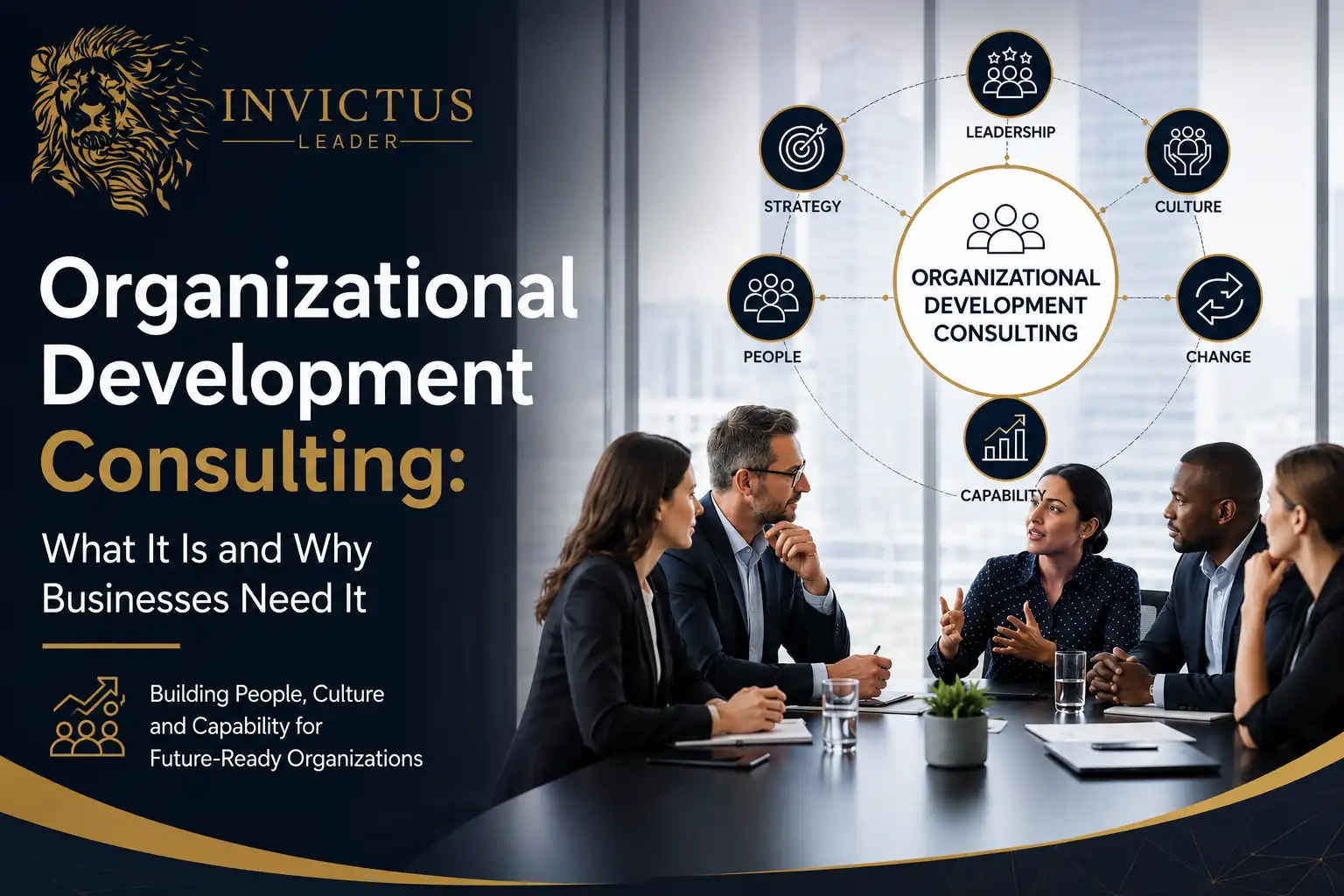
Organizational development consulting covers a broad set of interventions. Specifically, most client engagements draw from a consistent set of core areas:
Organizational Design
Structuring roles, reporting relationships, and decision rights so that your org chart facilitates—rather than blocks—the actual flow of work.
Culture & Behavior
Identifying the informal norms driving employee behavior and realigning them to support corporate strategy and values.
Change Management
Creating transition roadmaps that ensure new software, processes, or mergers are genuinely adopted, rather than just announced.
Leadership & Teams
Coaching leadership teams to communicate, resolve conflict, and align on high-priority decisions without reverting to department silos.
Workforce Planning
Aligning your workforce’s core capabilities and future headcount requirements with long-term strategic projections.
Process Redesign
Eliminating friction and streamlining handoffs in how reports, decisions, and cross-functional outputs flow through your system.
Consequently, most client engagements touch more than one of these areas at once. This is because they are rarely independent from one another. For example, a culture problem is often a direct symptom of a structural flaw. Therefore, a structural fix that ignores culture is unlikely to hold over time.
7 Signs Your Organization Needs OD Consulting
Any single symptom might be manageable on its own. However, when multiple signs appear simultaneously, they indicate a system-level issue. As a result, you will require an external, objective diagnosis from a specialist:
Stalled Execution
Executive decisions are clear, but major strategic initiatives lose momentum somewhere between the boardroom and the front line.
Outgrown Infrastructure
Your org chart, communication channels, and processes still reflect an earlier, much smaller stage of corporate history.
Chronic Silo Friction
The same departments clash repeatedly over handoffs, and simple mediation conversations fail to resolve the underlying tension.
Failed Mergers
Two workforces operate like separate, competing entities long after the legal transaction and system migrations are complete.
Mid-Level Leaks
A sudden increase in voluntary turnover at key leadership tiers points to systemic burnout or structural blockages.
Decision Paralysis
Sign-offs stack up through excessive layers of middle management, slowing your company’s operational response time.
Reverted Initiatives
A new process or culture policy was rolled out with fanfare, but teams quietly went back to their old habits within weeks.
Ultimately, addressing these signs early ensures you can design intentional solutions. In contrast, waiting until the friction becomes severe will damage both team morale and customer experience.
How OD Consulting Supports Future-Ready Organizations
Disruption-proof organizations are not built by accident. Instead, they succeed because they have invested in structural and cultural resilience. Furthermore, this flexibility allows them to absorb market shifts, leadership transitions, and operational updates without losing velocity.
Specifically, organizational development consulting builds this very foundation. Therefore, rather than helping you survive one single event, it strengthens your capacity to navigate continuous change. Consequently, it represents the difference between treating every market shift as an emergency fire drill and treating it as a normal operational adjustment.
OD Consulting Engagement Process
While every engagement is customized to the client’s specific needs, a standard, evidence-based process follows a structured five-step path:
Discovery & Diagnosis
Performing deep-dive qualitative interviews and organizational audits to identify exactly where systems are failing or blocking performance.
Findings & Leadership Alignment
Presenting diagnostic data to executive leadership to align on root causes and establish clear change priorities before proposing solutions.
Intervention & System Design
Co-creating detailed roadmaps for structural, process, or cultural modifications, matching the changes to what your teams can realistically absorb.
Implementation & Facilitation
Rolling out changes through structured training, workflow adjustments, and team workshops, resolving resistance collaboratively as it arises.
Feedback & Measurement
Establishing performance indicators and feedback loops to monitor adoption rates, adjust systems dynamically, and prevent regression.
Indeed, the projects that yield the highest return on investment are those where executives remain actively engaged. Therefore, OD consulting works as a collaborative partnership with your organization, rather than an external force operating from afar.
How to Choose an OD Consulting Partner
Not every consulting relationship delivers the same value. In fact, the wrong fit can waste both time and credibility internally. Therefore, a few key questions are worth asking before committing to a partner:
Diagnosis First
Do they diagnose before prescribing? Be cautious of advisors offering standardized solutions before they’ve completed an objective, system-wide assessment of your organization.
Scale & Complexity
Do they have experience at your scale? The organizational dynamics of a 150-person high-growth scale-up are entirely different from those of a multi-thousand-employee enterprise.
Capability Building
Do they build capability or dependency? The best partners design solutions that empower your internal team to maintain and adjust the systems, rather than making you permanently dependent on external advisory.
Success Metrics
How do they measure success? Ensure they establish concrete, observable baseline metrics (e.g., decision speed, retention, project execution rates) rather than measuring success purely by the delivery of slide decks.
Industry Context
Do they understand your industry’s pressures? An advisor needs to understand the regulatory, operational, and competitive landscapes of your sector to design practical, real-world structures.
Specifically, Invictus Leader’s approach to people systems and workforce architecture and culture systems design reflects this same core principle. Therefore, we prioritize thorough diagnosis before system design. As a result, we build organizational structures to hold up under real operating pressure, rather than to simply look good in a proposal.
Conclusion
In summary, organizational development consulting is not a simple fix for a broken department. Furthermore, it is not merely a rebranding of human resources. Instead, it is a strategic, evidence-based discipline designed to align structure, culture, and processes with business objectives.
Therefore, if the symptoms of system strain feel familiar, the best time to act is before they impact your customer experience. Ultimately, addressing structural friction deliberately is always more effective than attempting to fix it during an active crisis.
Ready When You Are
Build an Organization That’s Ready for What Comes Next
Invictus Leader partners with leadership teams to diagnose structural and cultural gaps. Furthermore, we design custom systems that hold under real operating pressure. Therefore, let’s talk about where your organization needs the most work.
Frequently Asked Questions
What is organizational development consulting in simple terms?
At its core, it is professional guidance that helps a company improve its internal systems. Specifically, it focuses on structure, cultural habits, and decision-making workflows, rather than treating symptoms in isolation. Therefore, it starts with an objective diagnosis of how work flows, followed by custom-designed changes to align operations with strategic goals.
How is organizational development different from management consulting?
Traditional management consulting typically focuses on what a business should do. For example, it might advise on entering new markets or financial restructuring. In contrast, organizational development focuses on how the company is organized to execute that strategy. Therefore, it targets leadership, alignment, communication, and structure. Ultimately, management consulting sets the destination, while OD builds the engine to get there.
How long does a typical OD consulting engagement take?
First, a focused assessment can take six to twelve weeks. Next, a full structural redesign and cultural rollout can span six to twelve months. Consequently, because sustainable behavior change takes time, engagements are usually phased to allow teams to absorb and adapt to the new systems.
Is organizational development consulting only for large enterprises?
No, it is not limited to large corporations. For instance, while large companies have more visible complexity, growing mid-sized businesses often need OD consulting the most. This is because informal processes that worked at 20 employees start creating chaos at 100. Therefore, scoping is adjusted to fit the team’s scale.
What’s the difference between OD consulting and hiring an internal OD manager?
Indeed, an internal OD manager handles ongoing maintenance, but can struggle with objectivity and internal company politics. In contrast, an external consultant brings cross-industry experience and a neutral perspective. Therefore, they can raise difficult issues without fear of career repercussions. As a result, many clients choose to partner them together.
Can OD consulting help with a specific problem, like high turnover or poor collaboration?
Yes, though the consultant will look for the systemic cause. For instance, high turnover is rarely just a compensation problem. Instead, it is often caused by unclear decision rights, siloed leadership, or a lack of career progression paths. Therefore, OD addresses these structural roots.
How do you measure the success of an OD consulting engagement?
Typically, success is measured by tracking operational metrics like decision cycle times, cross-department handoff speed, and key staff retention. In addition, these metrics are combined with qualitative indicators like engagement survey trends. Consequently, you can clearly see the return on investment.
Does organizational development consulting always involve restructuring?
Not necessarily. For example, while updating reporting lines is a common outcome, many OD projects focus entirely on improving collaboration. Similarly, they may clarify decision-making rules or shift cultural behavior without altering the org chart. Therefore, structural change is only used when necessary.
What industries typically use organizational development consulting?
It is widely used across all sectors, from finance and manufacturing to technology and healthcare. However, the driving factor is not the specific industry. Instead, it is usually a transitional event—such as rapid growth, a merger, or a pivot in corporate strategy.
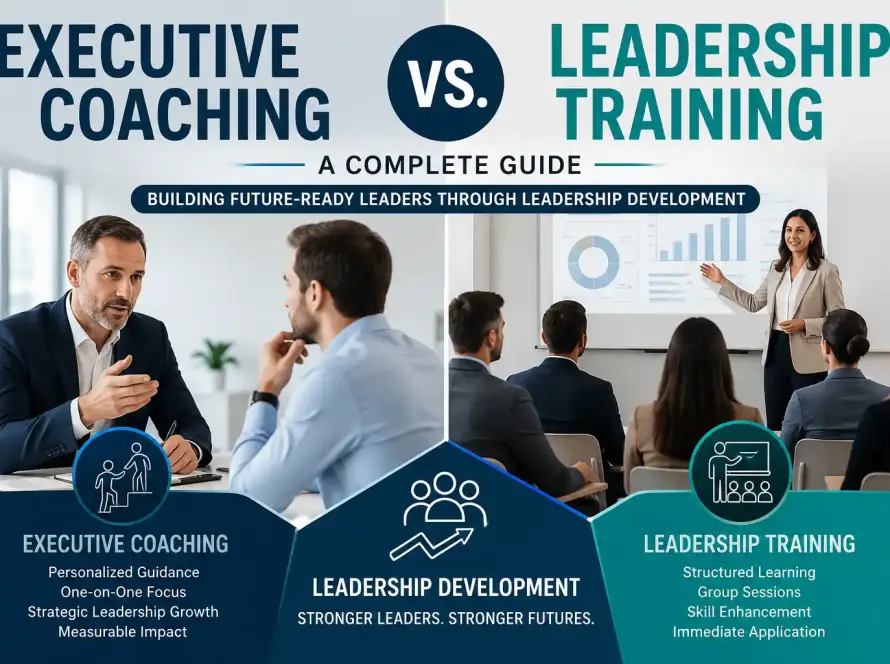
How do we know if we need OD consulting versus leadership coaching or training?
First, if the issue is isolated to a specific leader’s skill gap or behavior, coaching or training is the best fit. However, if the problem spans multiple departments, slows down decision-making, or involves cultural silos, it is a system-wide issue. Therefore, you require a comprehensive OD approach.